I Let a Surgeon Cut My Foot to "Fix" My Bunion. Eighteen Months Later, the Bump Was Back.
There is a specific reason surgery, splints and every gadget in your drawer didn't hold - and it is not the reason anyone is selling you.

They put me to sleep, cut the bone, and pinned my toe straight.
Eighteen months later I stood in my bathroom staring at the same bump. Same spot. Same foot.
If you have a bunion, somebody is probably steering you toward the exact mistake I made. Give me five minutes first. Nobody in this industry will tell you what I'm about to, because they can't afford to.
Thanks, Mom
I found my first bunion at 34. I knew exactly what it was, because I grew up looking at my mother's feet. Her mother had them too. So I did what they did: nothing. It's genetic, I told myself. It's fate.

Half true, it turns out. You do inherit the foot - the shape, the loose joints. But the drift itself is driven by something that is still happening, every single day. Hold that thought, because it's the reason everything you've tried has failed.
For years mine was just ugly. I quit sandals. I kept my shoes on at other people's houses. Then it started to hurt - randomly, which was the cruel part. Fine all morning, then a stab out of nowhere. The last two hours of every day were the worst two. Some nights it woke me up.
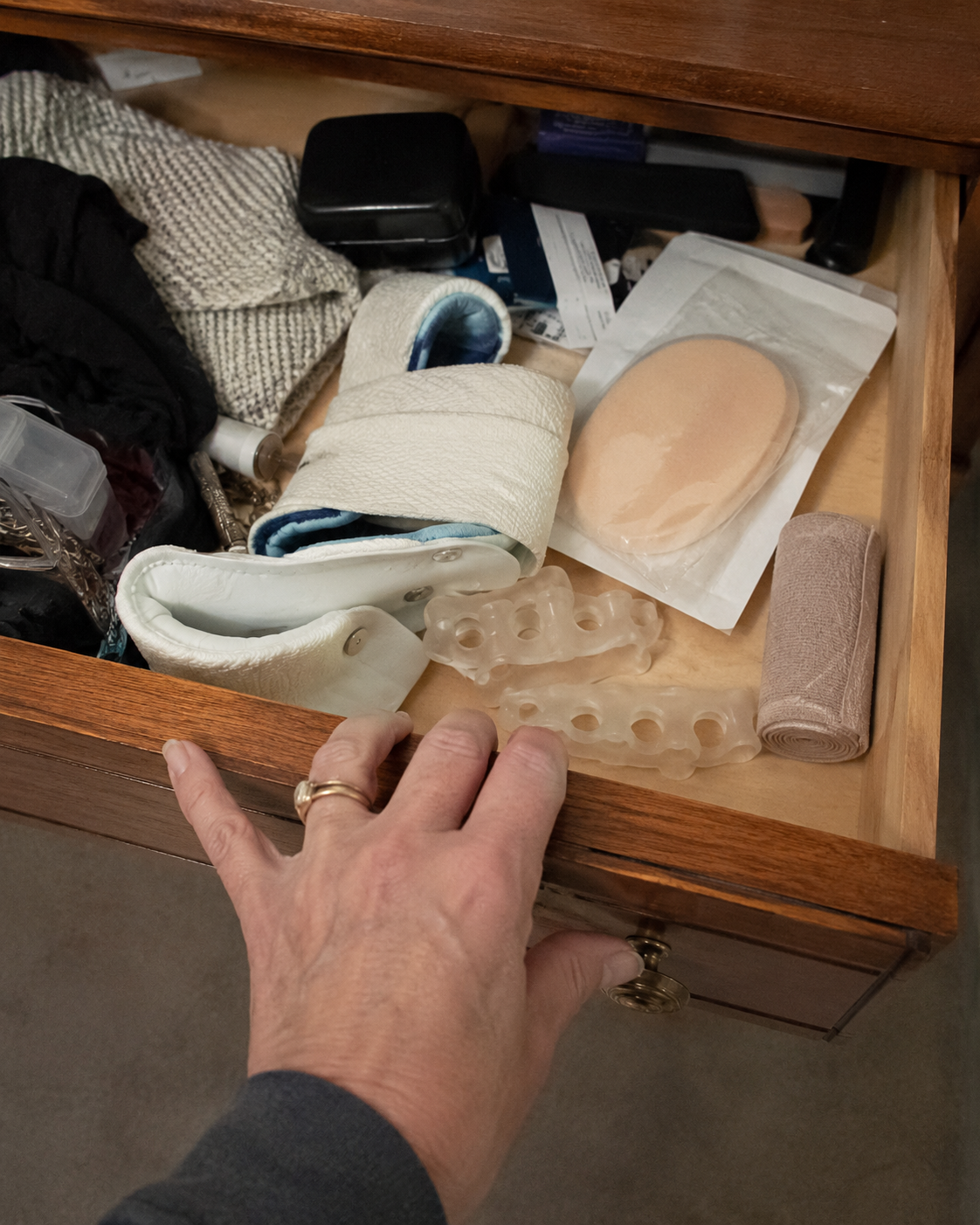
I bought it all. Wide shoes. Gel pads. A night splint I couldn't sleep in. Two different toe gadgets, worn religiously, that changed nothing. And a quiet little voice kept whispering: maybe you just didn't try hard enough.
So I let them cut
A podiatrist told me surgery was the only real fix, and in the consult I got scared into it: the pressure, the warnings about waiting too long. I said yes.
General anesthesia. A screw in my foot. Weeks where I wasn't allowed to put any weight on it.
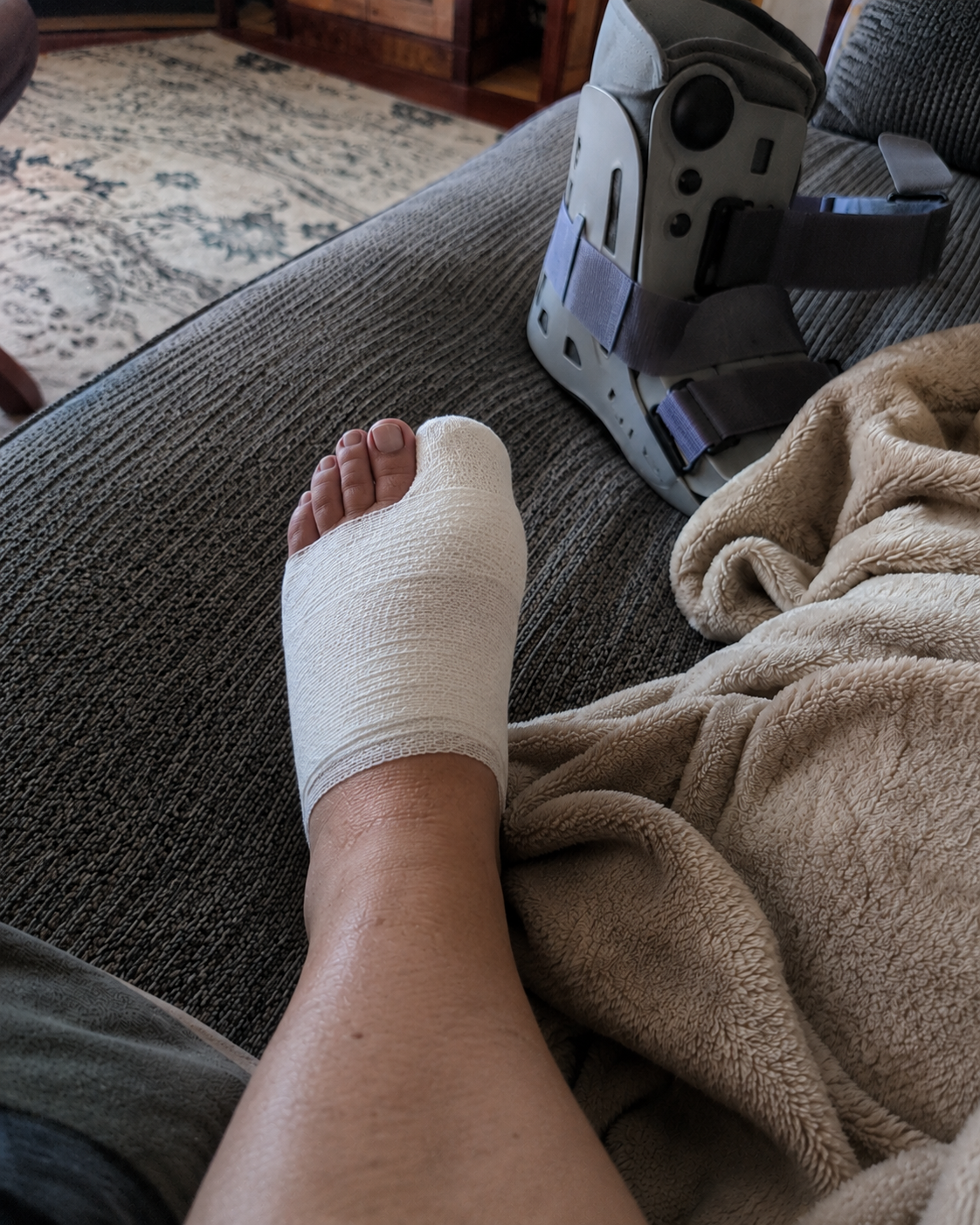
A frame to cross my own hallway.

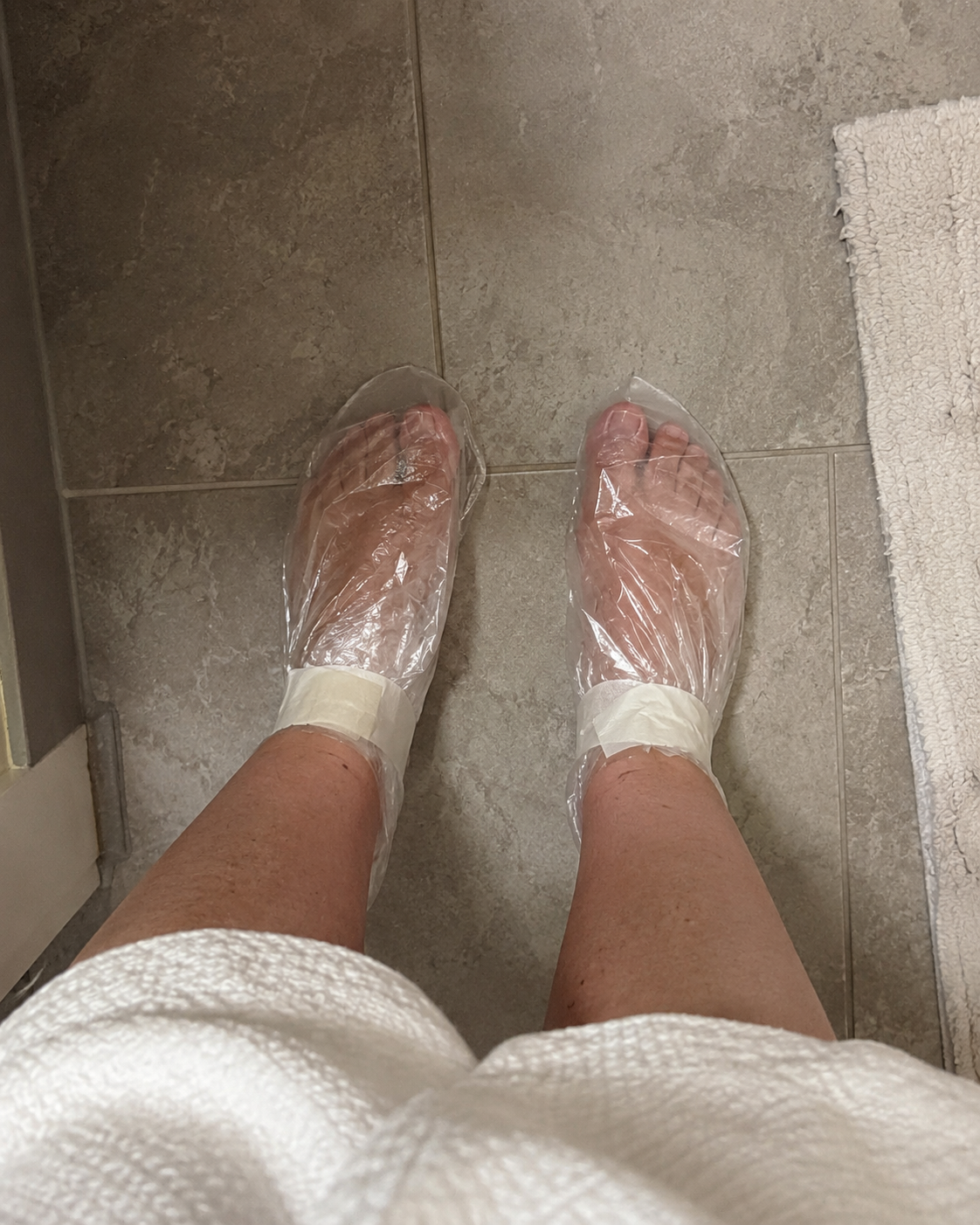
A month of showering with my foot in a plastic bag. Months of my life, gone.
For about three months, I let myself feel hopeful. Then the ache crept back. By month eighteen, so had the bump. My surgeon shrugged. "These things recur sometimes."
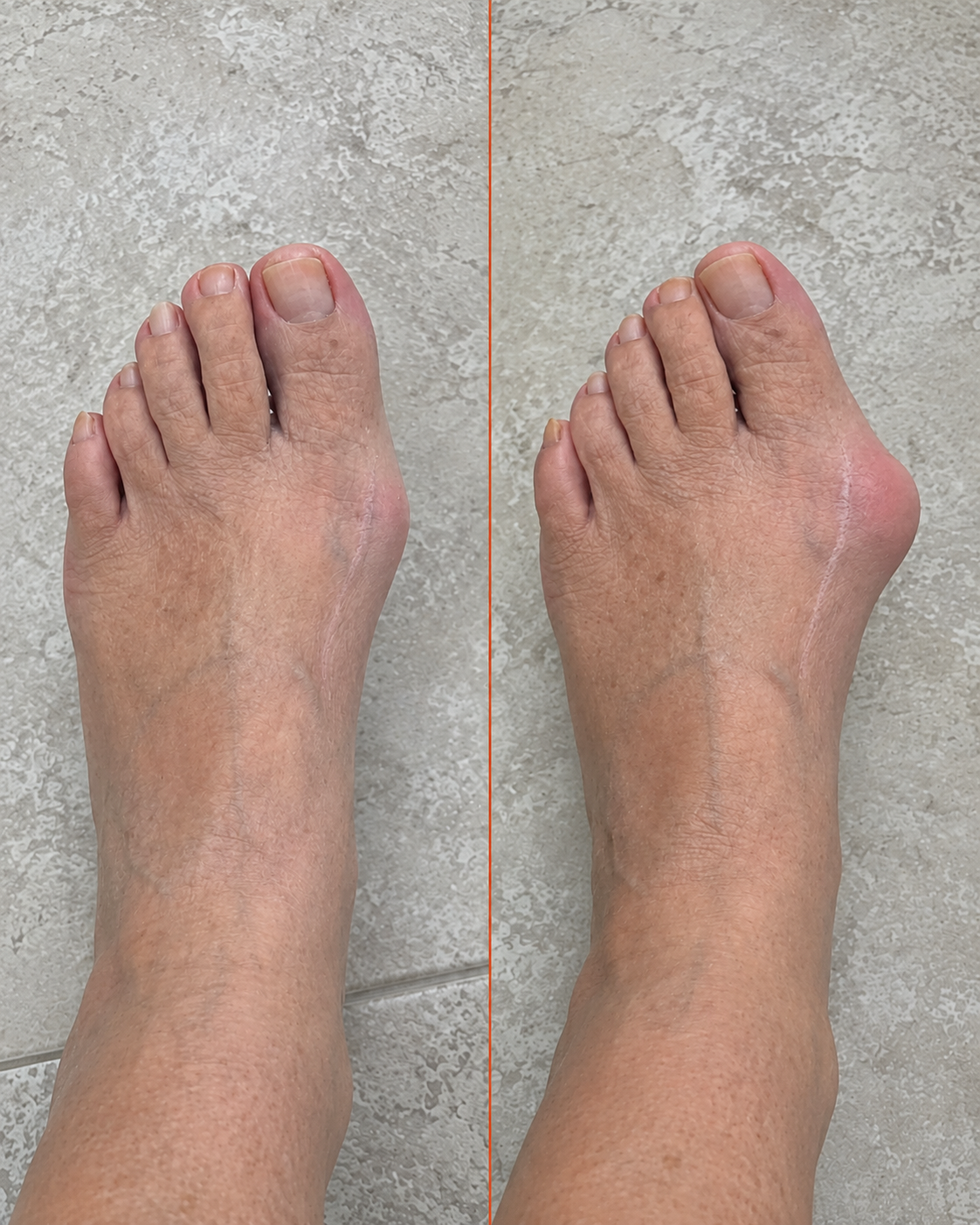
He wasn't being dramatic. I went digging afterwards: across the research, roughly one in four bunions comes back after surgery. Nobody prints that on the brochure.
I sat in my car outside his office and cried. If a surgeon with a saw couldn't fix this, what chance did I have?
The question that changed everything
That night I stopped asking "how do I get rid of the bump" and started asking a better question: why does nothing hold?
Two discoveries. The first made me furious.
There's exactly one "awareness day" for bunions - National Bunion Day. It was founded by the company that sells the bunion surgery. Not a conspiracy theory; it's on their own website. Which is why you only ever get offered two doors: orthotics, or the knife.
The second discovery was the third door.
This is the part where I'm supposed to say the gadgets you bought were junk and mine is special. Except it isn't true. Your gadgets worked perfectly. They did the one thing they were built to do: hold your toe in a nicer position while they were on. You wore them right. And they were never, ever going to change anything - because the problem was never position.
The problem is a muscle.
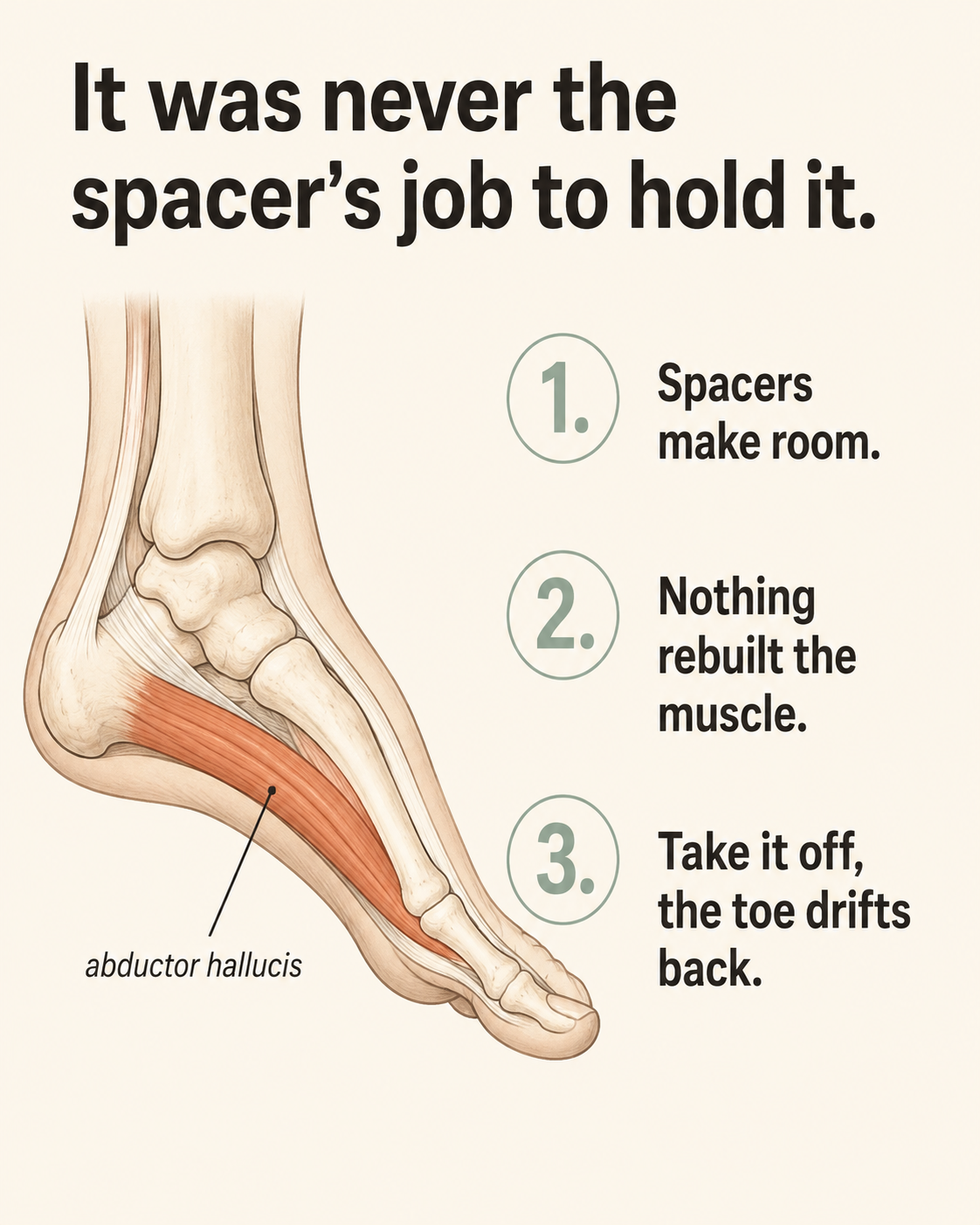
Along the inside of your foot runs a muscle called the abductor hallucis. Its one job is to pull your big toe away from the others. Put that foot in shoes that are narrowest exactly where it is widest - for thirty years - and the muscle stops being used. It weakens, like any unused muscle. Once it's too weak to hold the toe, the toe drifts, and nothing is left inside your foot to pull it back.
Every product I ever bought made room for the toe. Not one of them rebuilt the muscle that holds the room. Take the device off, the toe drifts straight back. That's why the drawer is full. It was never me. It was never you.
Don't take my word for it. Barefoot, right now: try to move your big toe sideways, away from the others, without curling it or moving the other four.
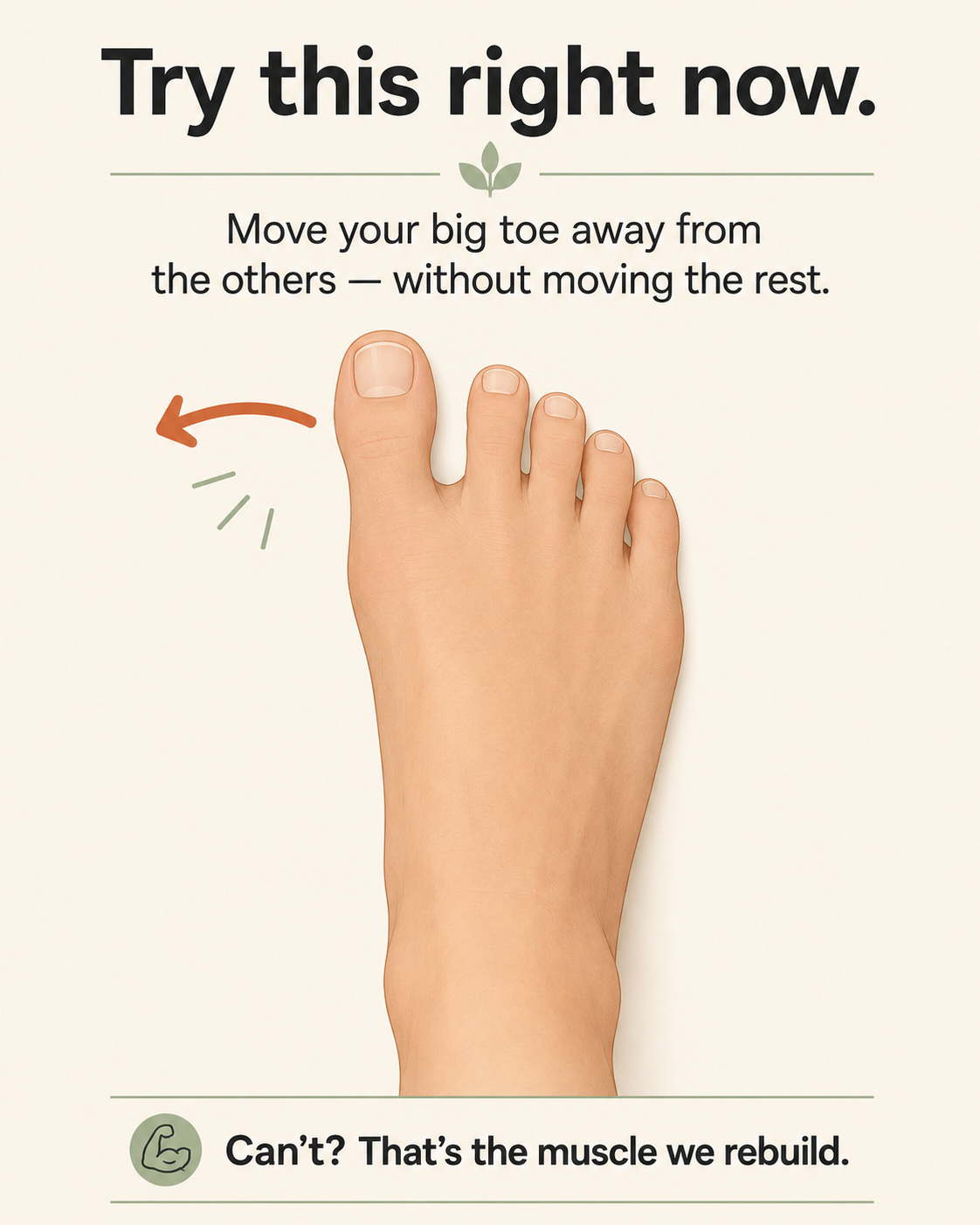
Can't? Neither could I. Not a twitch. That's not age or fate - that's a muscle that has forgotten how to fire. And you already know the one great thing about muscles: they can be rebuilt.
The study nobody showed me
I needed to see it in an actual clinical trial before I spent another dollar. I found one, and it stopped me cold.
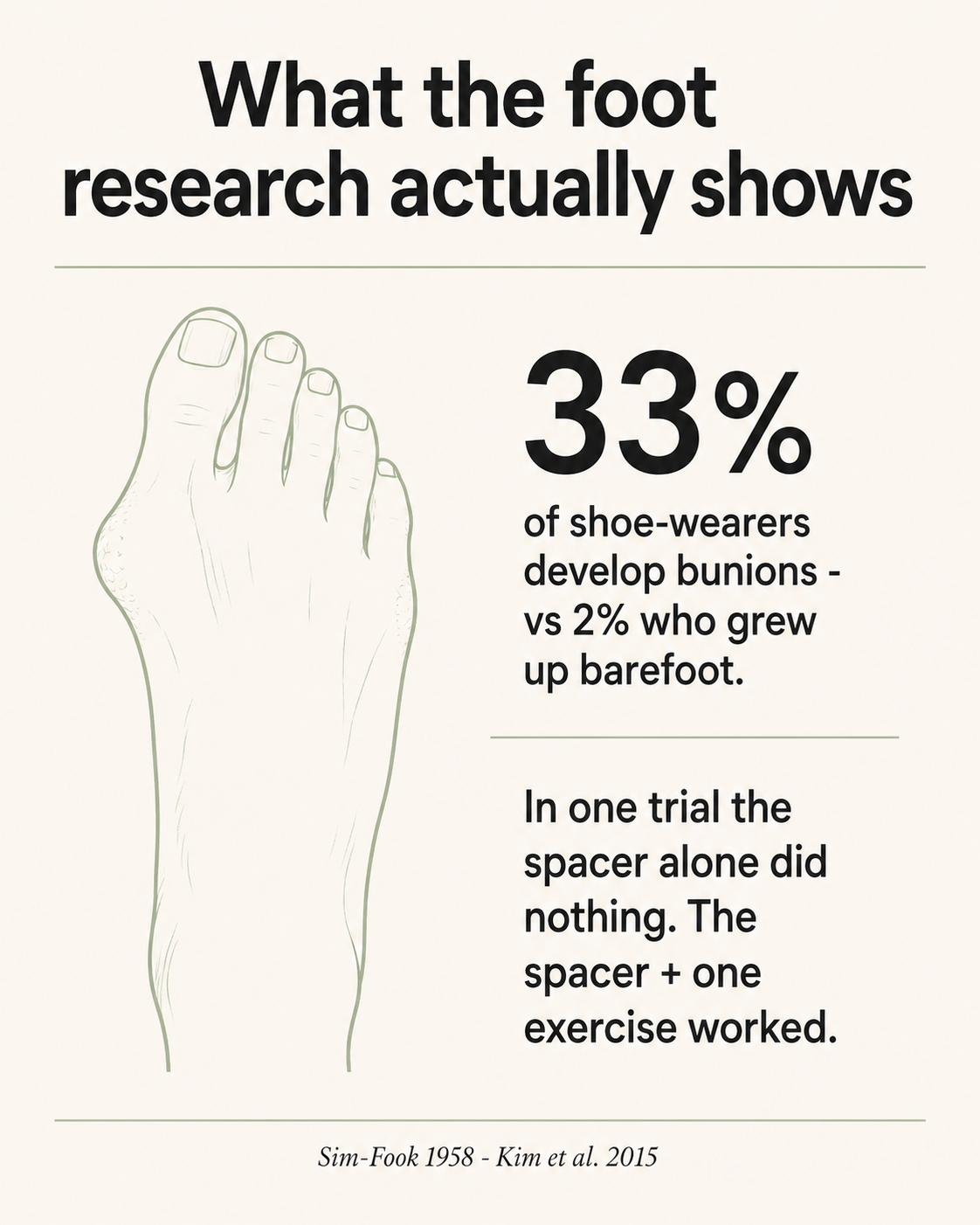
One group wore a toe spacer alone: no significant change on anything measured. Honestly? Good. That matches your drawer and mine. But the group that wore the same spacer and did one simple toe exercise improved on every measure tracked - including the size of that little muscle.
The spacer buys the space. The muscle keeps it. Everything I'd ever been sold was half of a method.
What I actually did
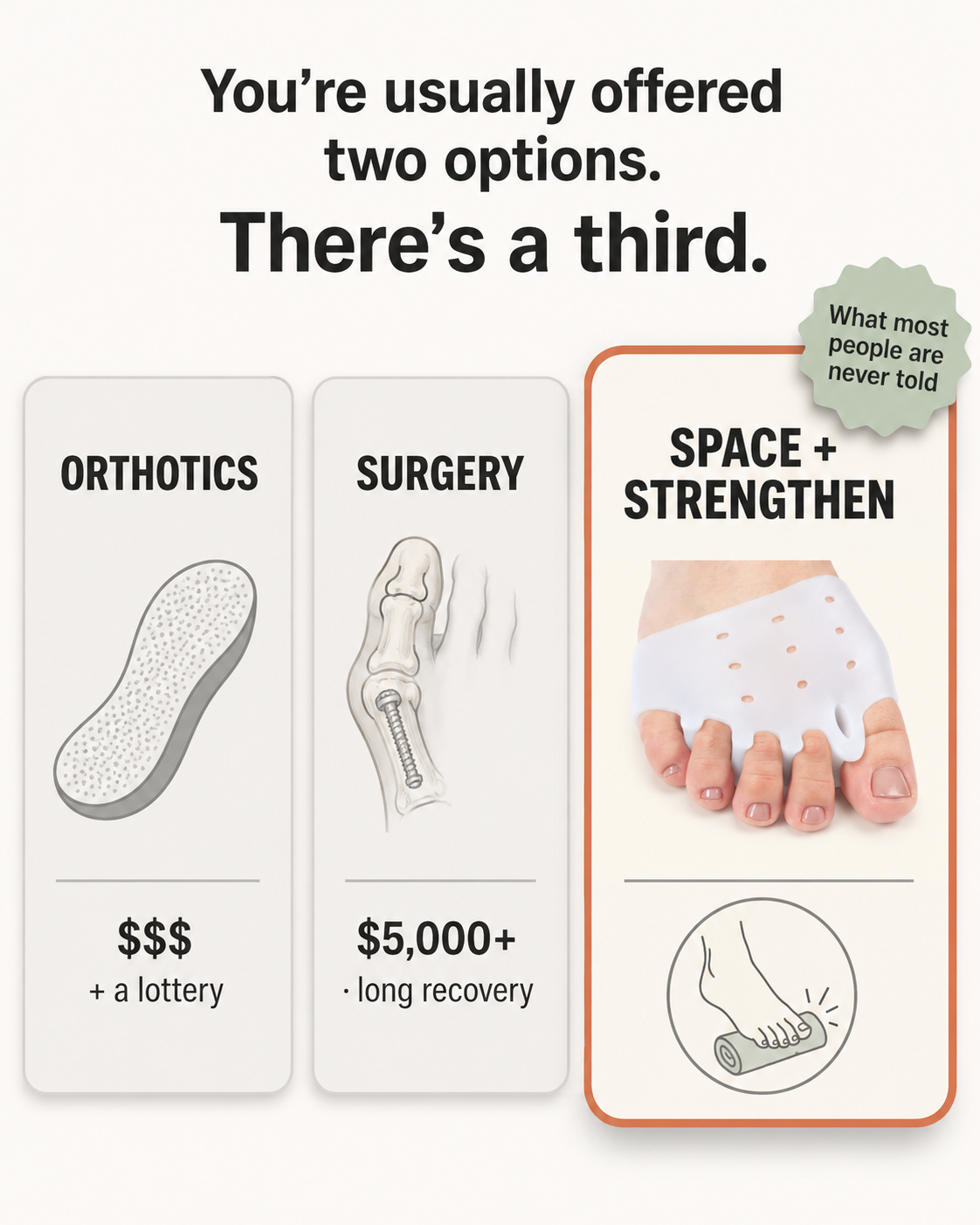
I stopped shopping for a miracle and did the two halves together.
Daytime: a thin silicone spacer inside my normal shoes, keeping the pressure off the joint while I walked. Evening: shoes off, spacers on, a few minutes of toe work on the living room floor while the TV was on. That's the entire routine.
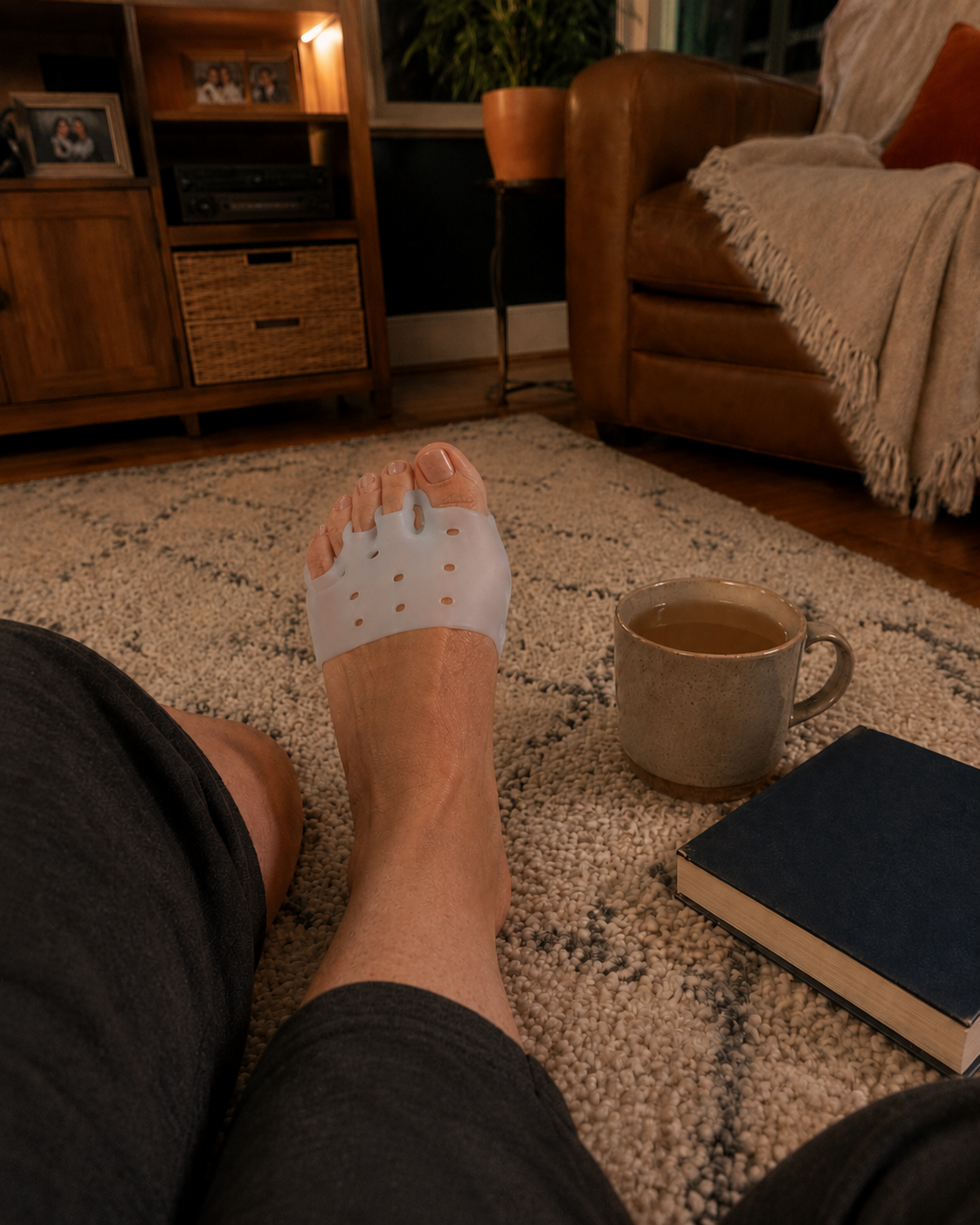
The set I used is called ComfyKind. I picked it for a boring reason: the spacers are 3mm thin, so they disappear inside shoes I already own. Every other one I'd tried turned my shoes into a vice.
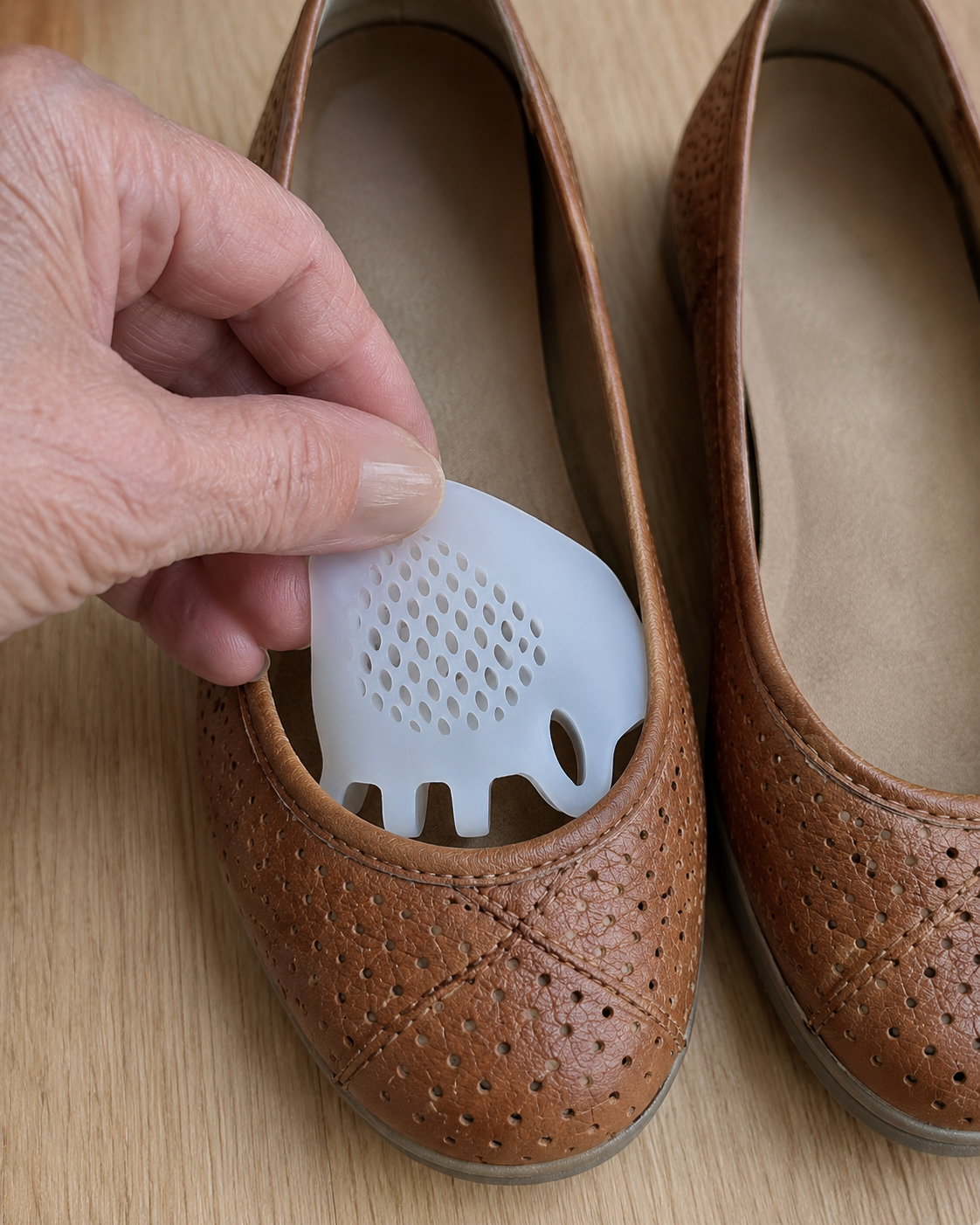
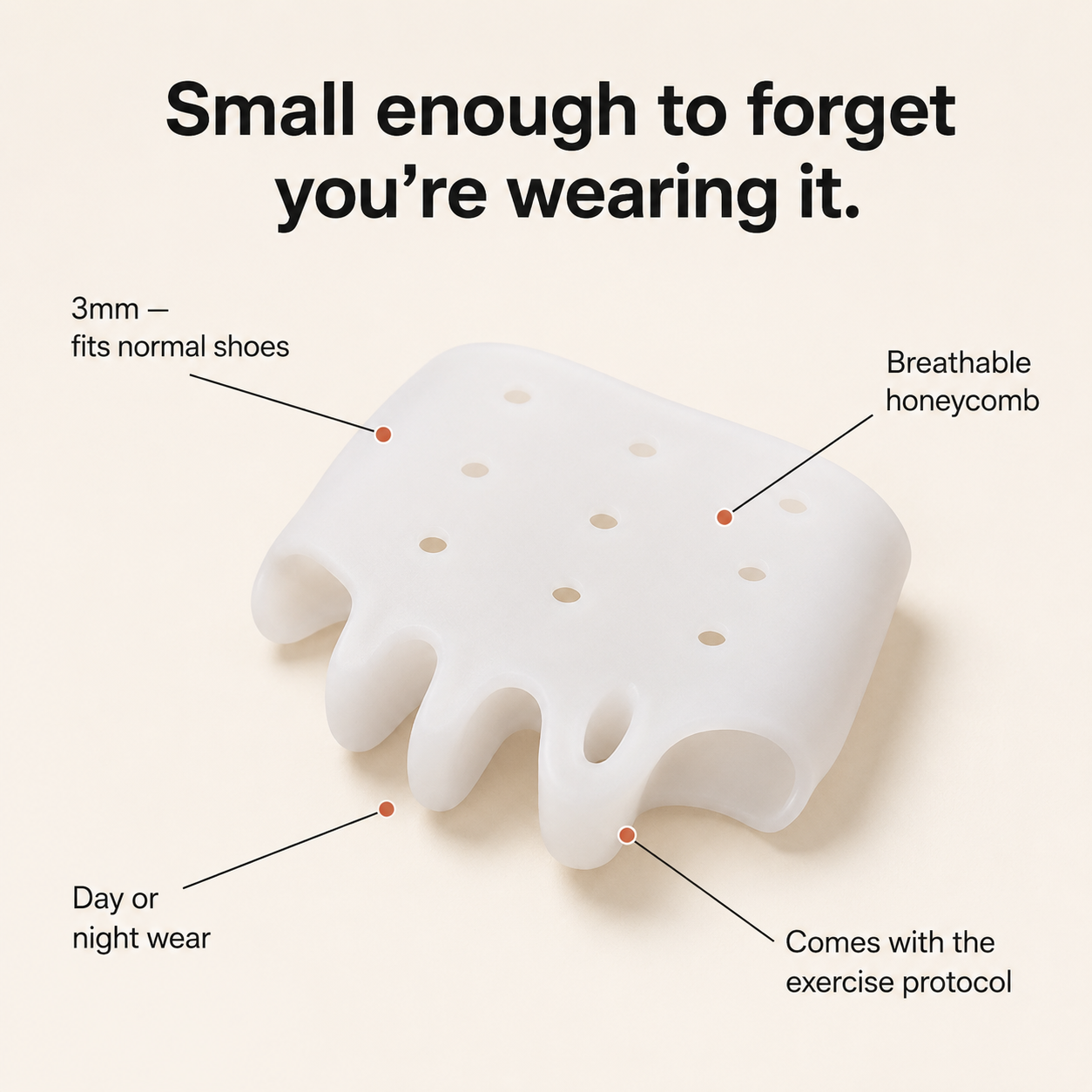
But the silicone isn't the point. The point is what comes with it: the Foot Reset Protocol - the exact exercises, the wear schedule, the week-by-week timeline. The other half. The half nobody had ever sold me.
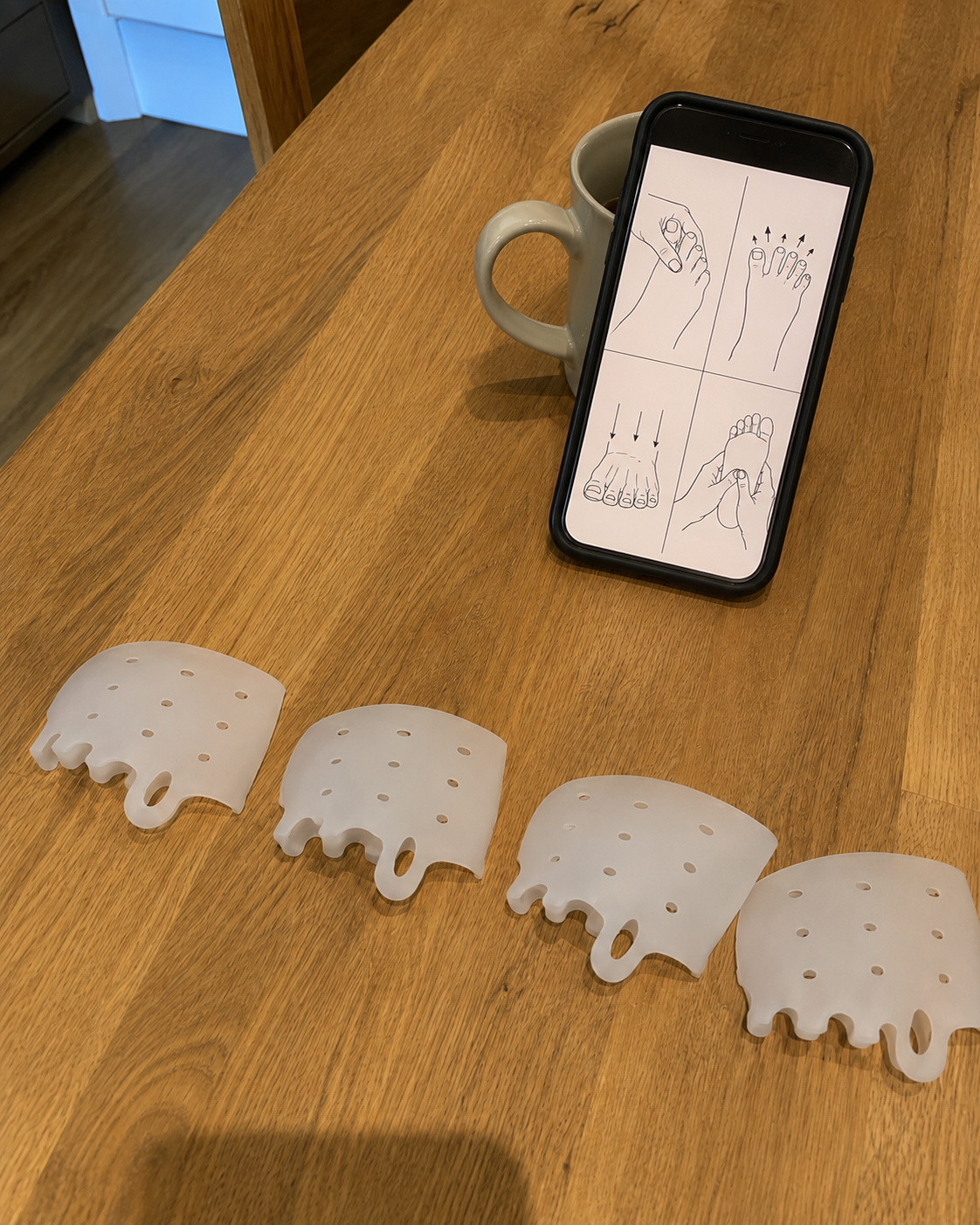
4 pairs + the full protocol - 60-day guarantee
What changed, month by month
I won't tell you my toes are model-straight. They're not.
But by week two, the end-of-day burn went quiet - those brutal last two hours were the first thing to go. By month two, shoes stopped feeling like a fight. By month three I was walking the dog as far as I wanted and paying nothing for it that evening. The bump itself went calm: less red, less angry, less there.
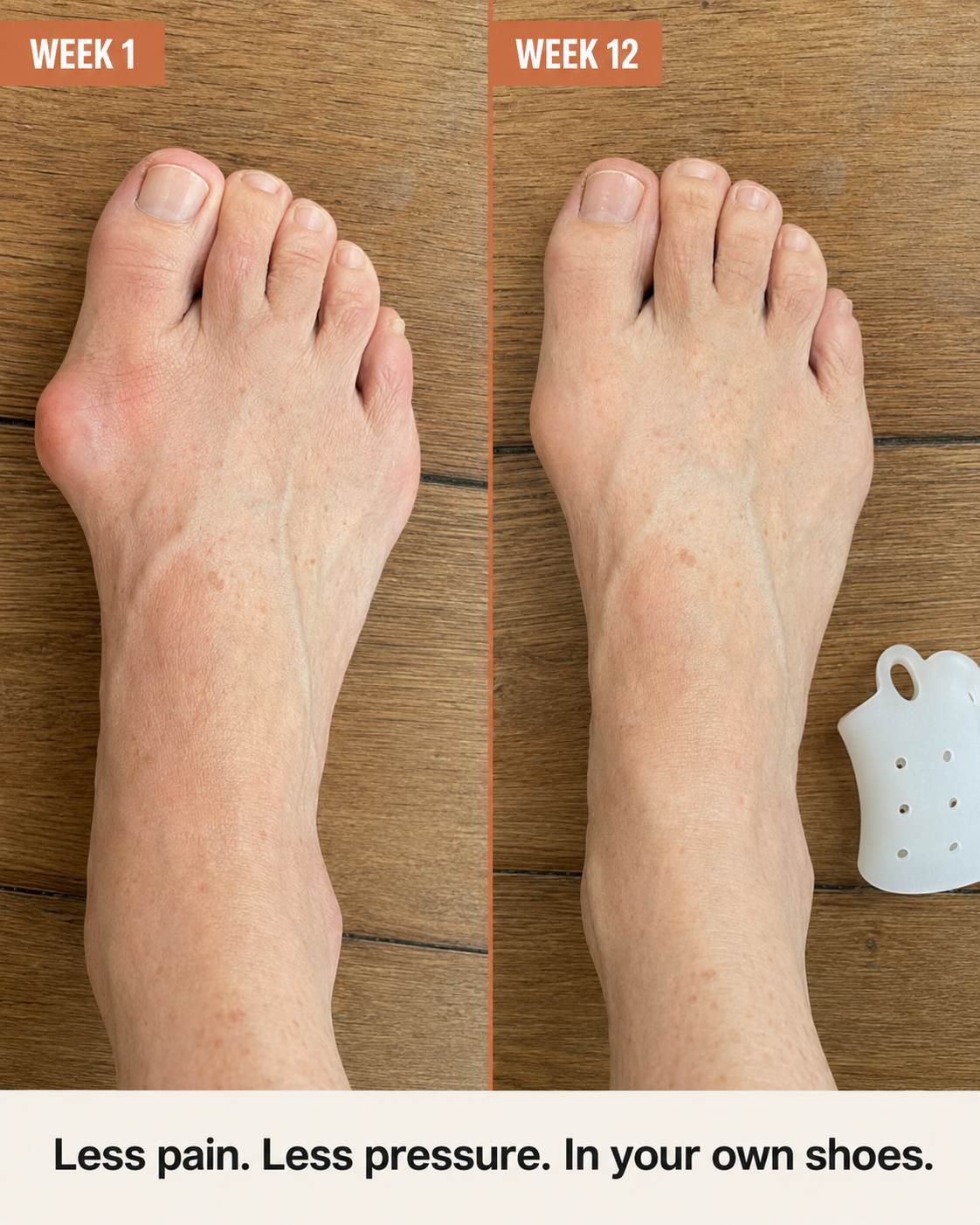
And in December, at my sister's, I took my shoes off at the door and forgot to be ashamed. I remembered on the drive home and cried at a red light. The good kind, for once.

About the cheap ones online
Buy one if you want. I own two. A spacer alone does nothing - that's not my opinion, that's the trial. Same silicone, no method, no change.
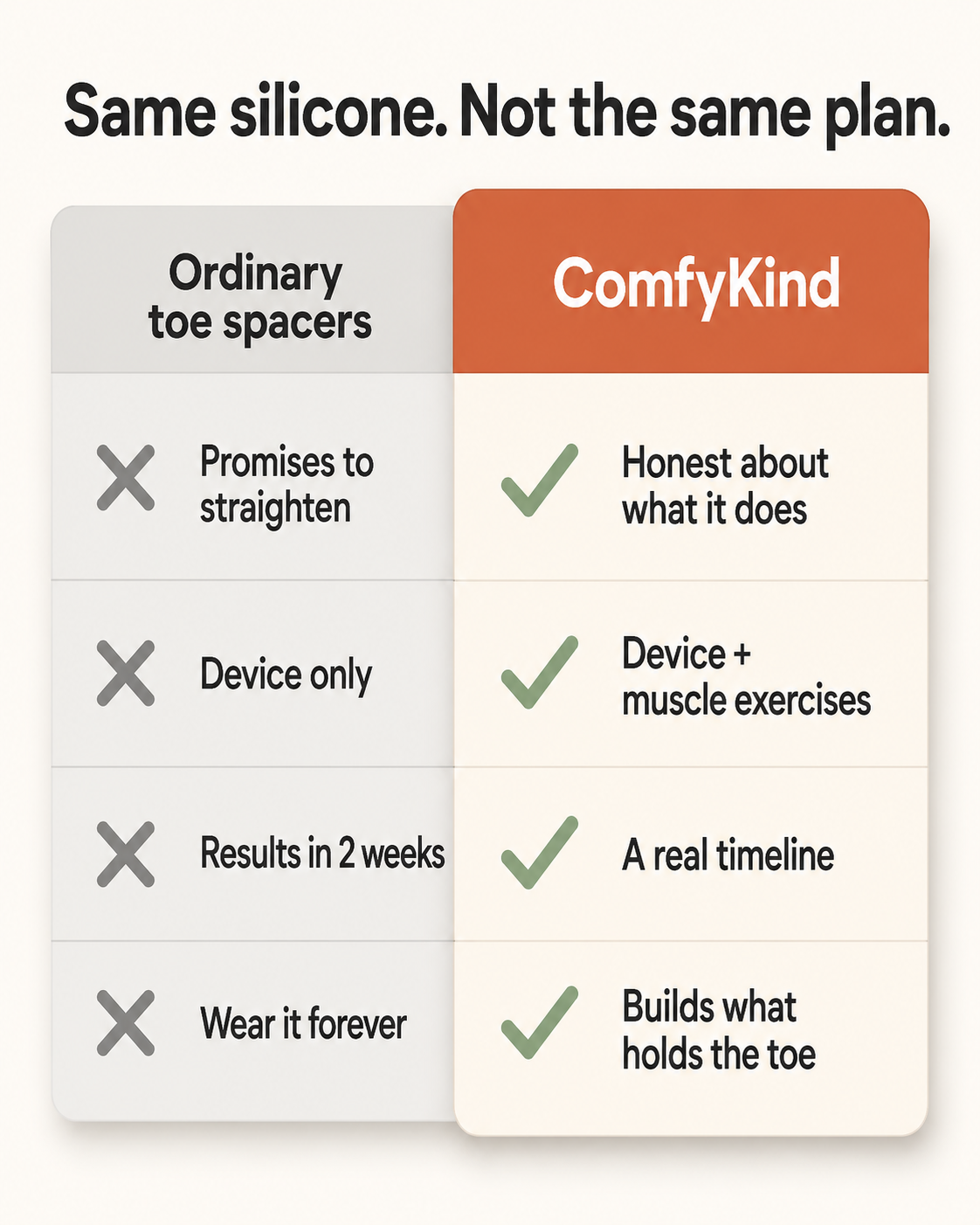
ComfyKind is the spacer plus the method that rebuilds the muscle, on a real timeline - not another two-week fairytale for your drawer.
What it will NOT do
It will not straighten your toe in a month. Nothing made of silicone will, whatever the ads promise. What I got was relief in the first weeks, and real change over months.
It will not hide in open sandals. You can see it in open-toe shoes. It does its work in closed shoes and evenings at home - that's where it worked for me.
It is not effortless. A few minutes most evenings. Skip the exercises and you've bought a very nice version of the thing that already failed you.
Everything above is what ComfyKind told me before I ordered. Nobody selling the two-week miracle ever gave me that courtesy - and honestly, that's why I trusted them enough to try one more time.
The questions I'd be asking
If the joint has gone rigid, the toe may not move much - no honest person will promise otherwise. But relief, a calmer joint, and helping stop it getting worse don't require the toe to move. Those are the things that change your day.
You inherited the foot. You did not inherit a weak abductor hallucis - that happened over years, and muscle responds to training at any age. That part is yours to change.
The drawer is full of half the method. Spacing without strengthening fails - I proved it, you proved it, and the trial proved it. This is the first thing I found that includes the other half.
That was my fear too - I'd been burned three times already. What tipped me: they give you 60 days, and if your evenings aren't better you send it back for a full refund. The way I saw it, I'd already spent years not trying. Two months of trying felt like nothing.
Where to get it
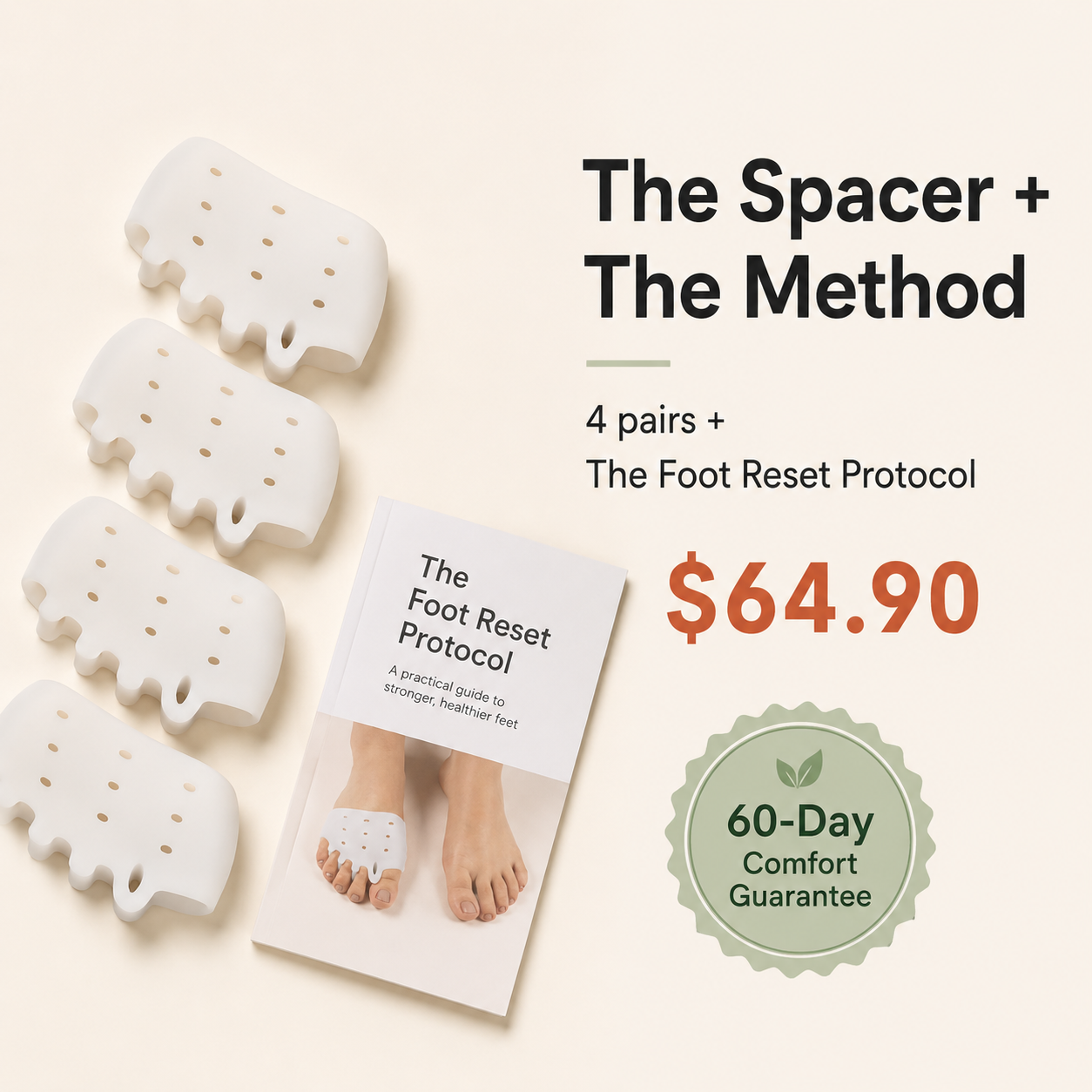
- 4 pairs of 3mm silicone spacers
- The complete Foot Reset Protocol
- Week-by-week timeline and wear schedule
One honest note on timing: this is not a two-week product. I started in the fall; by the next summer my feet - and my evenings - were somewhere completely different. Start now, and next summer can be yours.
GET THE SPACER + THE METHODShips from the official store - 60 days to try it - full refund if it does nothing
Don't make my mistake in either direction: don't rush to surgery, and don't spend another year doing nothing because you've "already tried everything." You've tried half of everything.
Wishing you relief,
Diane
Advertorial. Diane's story is illustrative of customer experiences; individual results vary. ComfyKind is a comfort product, not a medical device, and is not a substitute for professional medical advice.
Comments